
Cyber Attacks Are a Business Risk. Cyber Insurance Helps You Survive Them. Cyber Security Helps You Prevent Them.

If your business uses email, cloud apps, online banking, or stores customer/employee information, you’re exposed. Cyber incidents can trigger downtime, ransomware, fraud losses, regulatory headaches, and reputational damage.
F1Tech is a Canadian MSP with 21 years of experience specializing in cyber security. We’re partnering with Ontario Insurance Network so you can align real-world security controls with the insurance coverage you need.
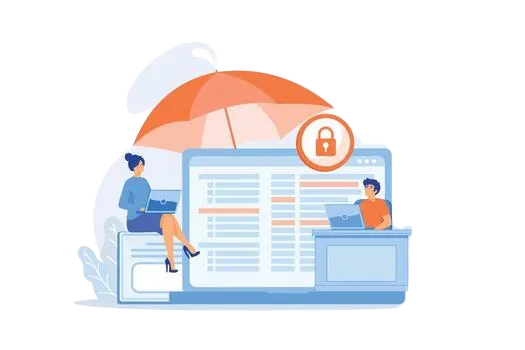
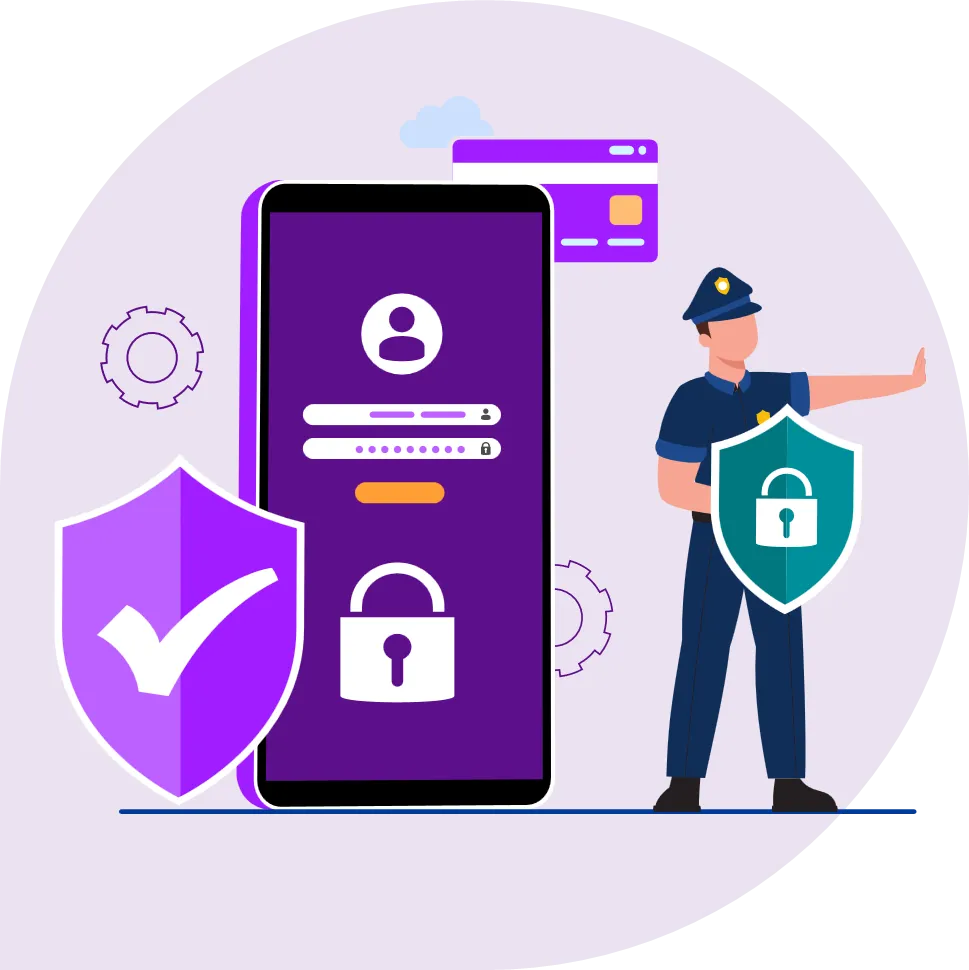
Cybercrime Isn't a Big-Company Problem Anymore
Small and mid-sized businesses in Canada take the brunt of cybercrime, not the big enterprises. Attackers go where the work is easiest, and SMBs tend to have the same kind of valuable data as a large company — customer records, banking access, payroll, sometimes health info — without the security budget to match.
- Roughly 4 in 10 cyber attacks are aimed at small businesses.
- Ransomware demands against Canadian SMBs now routinely land north of $200,000, and that's before downtime, legal fees, and recovery.
- More than half of small businesses that take a serious hit don't make it to the two-year mark afterward.
- Phishing emails are still the way in for most attacks. One click is enough.
Insurance Pays the Claim. Security Prevents the Claim.
Cyber insurance matters. But there's a part of it most business owners find out the hard way.
Insurers have spent the last few years tightening up what they expect from policyholders, and they're not loosening up any time soon. If you can't show you've got real security in place, you'll usually run into one of these problems at renewal (or worse, at claim time):
1. Your premium jumps
2. Your coverage gets cut back
3. You file a claim after an incident and the insurer denies it because the controls you said you had weren't really there
It used to be that you could tick a few boxes on the application and call it done. That's gone. These days underwriters want to see proof of things like:
- Multi-factor authentication on email, VPN, and any admin logins
- Endpoint detection and response, not the free antivirus that came with the laptop
- Backups that are tested and stored somewhere ransomware can't reach
- Security awareness training for your staff
- A patching routine that actually gets followed
- A written plan for what happens in the first hour of an incident
That's where we come in. F1Tech puts those controls in place, keeps them running, and documents them properly, so the answers on your insurance application match what's really happening on your network. The result: a renewal you can afford, and a claim that gets paid when you need it to.


When Prevention Fails, Coverage Matters
Even with strong security, no defense is 100%. A comprehensive cyber policy through Ontario Insurance Network helps cover:
- Ransomware payments and negotiation with threat actors
- Business interruption losses while systems are down
- Forensic investigation to determine what happened and what was taken
- Legal fees and regulatory fines (PIPEDA, provincial privacy laws)
- Mandatory breach notification to affected customers and employees
- Credit monitoring services for impacted individuals
- Public relations and reputation management
- Funds transfer fraud and social engineering losses
- Restoration of data and systems
For a 20-person business, a serious incident without coverage will run well past $500,000 once you add up downtime, recovery, lawyers, and notification. With a proper policy and the right controls in place, the same incident is a bad week instead of the end of the company.
A Two-Layer Defense Built for Canadian Business
Layer 1 — Ontario Insurance Network: Financial Protection
A properly structured cyber insurance policy tailored to your industry, revenue, and risk profile. OIN's brokers work with leading Canadian and international cyber underwriters to find coverage that actually fits your business.
Layer 2 — F1Tech: Technical Protection
A 21-year Canadian MSP that implements and maintains the controls insurers now require. We don't just install tools — we document, test, and report, so your insurance application is honest and your claims are defensible.
How OIN and F1Tech Work Together
Most businesses end up buying cyber insurance and managing IT in two completely separate conversations, with neither side talking to the other. That's how policies get written based on what a business thinks it has in place, and how claims end up getting denied months later when an investigator finds out it wasn't.
The partnership between OIN and F1Tech fixes that. Kyle and his team at OIN find you a policy that fits the business you actually run. We make sure the security side of that policy — MFA, backups, monitoring, training, all of it — is in place and documented before your renewal lands on the underwriter's desk.
When it works the way it should, you pay less, you're covered for more, and if you ever do need to file a claim, there's nothing for the insurer to argue about.
Our Happy Customers
Doug McLaughlin

We have worked together with F1 Tech for over 20 years. They have provided our firm with superior customer service and have assisted our team with navigating through challenging changes and adaptive measures with software and hardware required to support our growing business needs. We would highly recommend working with F1 Tech's team on any relevant upcoming assignment.
JoAnne Doucette
We have always trusted in F1Tech for all our IT needs, whether it was for our personal or business use. Everyone who works there is respectful, professional and positive to work with. When running a company, you highly rely on a IT team when problems arise. With confidence, we can always call on F1 Tech to help us out and rectify any issues we are having. I have recommended their services multiple times and will continue our professional relationship for many years to come hopefully.
Bradley Hall
For too long, we handled IT internally. But the team was getting larger, technology was getting more complexed and security risks were increasing. We lacked the expertise to move forward so we turned to F1Tech. For the past two years, they have been proactively keeping our network safe, repairing what broke and providing solutions to fit our budget. James, Ryan and the team continue to be a source for knowledge and information. I wish everything would just stay the same. But since they won’t, I am glad F1Tech is on our side.
For all your cyber insurance needs, contact Kyle.
Kyle Brill
Kyle brings years of business insurance expertise to the OIN team and works with Ontario business owners to make sure their coverage actually matches the risks they face — including today's growing cyber threats. Friendly, professional, and locally based in Bowmanville, Kyle takes the time to understand your operation and tailor coverage that fits, rather than pushing a one-size-fits-all policy.
Call Kyle directly: 905-623-2527
Email: [email protected]
Visit: 26 King St. E, Bowmanville, ON

Frequently Asked Questions

What do we actually do?
We run the security side of your business so you don't have to think about it. Day to day, that looks like:
24/7 monitoring of your network and endpoints, with a real person responding when something looks off. Email and phishing protection on the front end, because that's where most attacks start. Multi-factor authentication set up properly across Microsoft 365, your VPN, and any admin accounts. Backups that are tested regularly and kept somewhere ransomware can't touch. Patching that gets done on a schedule instead of when someone remembers.
On the people side, we run security awareness training and send simulated phishing emails so your staff learn to spot the real ones. We do penetration testing once a year (or more, depending on your industry) to confirm everything we've built is holding up. And we keep an incident response plan on file so if something does go sideways, nobody is making it up as they go.
All of this gets documented in a way that makes your next insurance renewal a much shorter conversation.
Why is my cyber insurance premium going up even though we've had no claims?
The entire cyber insurance market has hardened over the past several years due to the volume and severity of claims industry-wide. The single biggest factor in your individual premium now is the security controls you have in place. Businesses with documented MFA, EDR, backups, and training routinely see 20–40% better pricing than those without.
My insurer is asking about MFA, EDR, and backups on my renewal. What does that mean?
These are now baseline requirements. MFA means a second verification step beyond a password. EDR is advanced endpoint protection that detects behaviour, not just known viruses. Backups must be tested and stored where ransomware can't reach them. If you're unsure whether what you have qualifies, that's exactly what our free assessment clarifies.
Can my claim really be denied if my controls aren't in place?
Yes. Cyber policies are underwritten based on what you attest to on the application. If a breach investigation shows MFA wasn't actually enabled, or backups weren't actually working, insurers have grounds to reduce or deny the claim. This is the single biggest reason to make sure your stated controls match your actual controls.
We already have an IT person/company. Why would we need F1Tech?
Most general IT providers are excellent at keeping systems running but aren't security specialists and don't track insurer requirements. We frequently work alongside existing IT teams in a co-managed model — handling the security and compliance layer while they handle day-to-day operations. We can also fully replace IT if that's the better fit.
How quickly can you get us insurance-ready?
For most SMBs, the core controls insurers require can be implemented in 30–60 days. We prioritize the items that most affect your premium and your claim defensibility first, then build out from there.
©2026 F1 TECH INC. All Rights Reserved.